
Blog / Lincoln History, Heritage & Automotive Legacy

The Lincoln MKZ Sedan: A Tribute to Lincoln’s Surprise Performance Icon

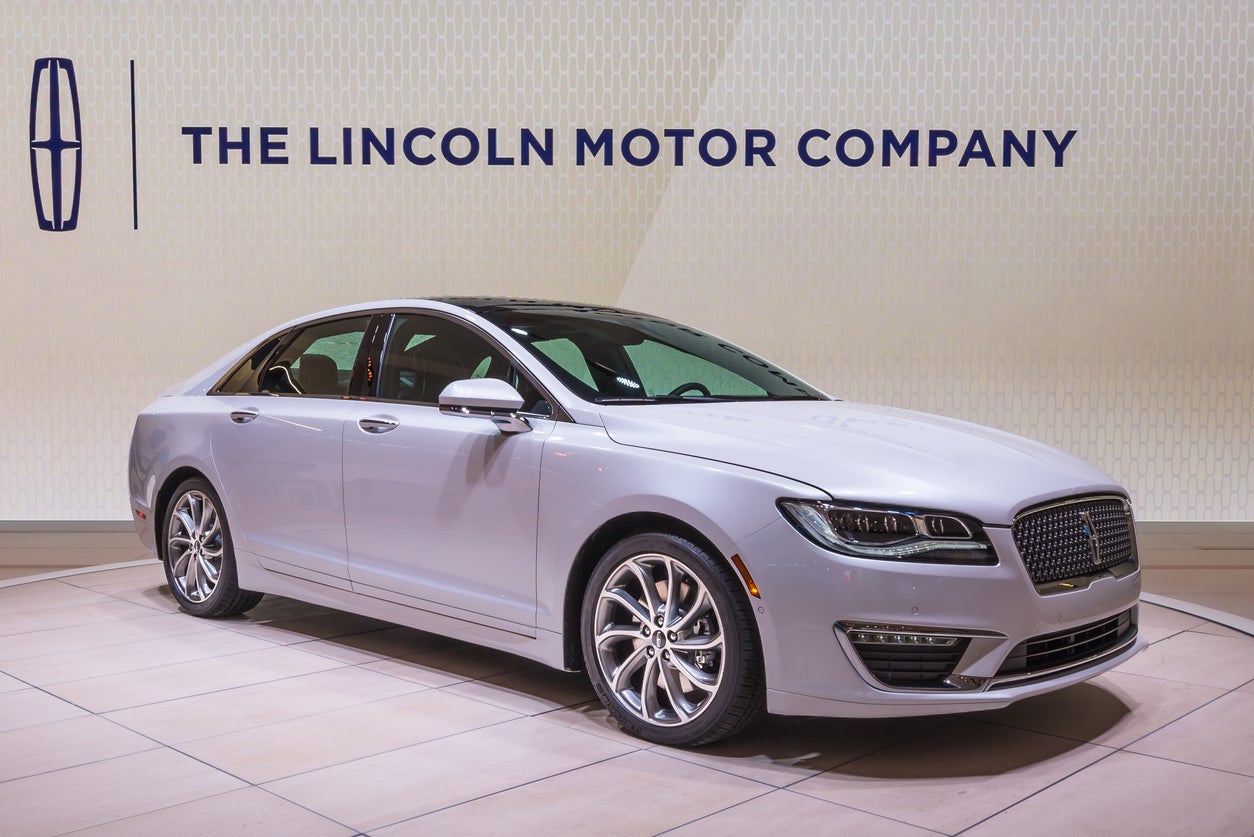
Detroit, MI, USA - January 11, 2016: A 2017 Lincoln MKZ car at the North American International Auto Show (NAIAS), one of the most influential car shows in the world each year.

For most of its history, Lincoln wasn’t known for thrilling performance. It was a brand synonymous with sophistication, smooth rides, and old-school luxury, rather than track-worthy performance or engineering feats. But for a short period, Lincoln delivered something unexpected— a car that surprised enthusiasts by challenging the status quo. That car was the Lincoln MKZ sedan.

While often overlooked in conversations about powerful vehicles, the Lincoln MKZ’s final iteration achieved something remarkable. It became one of the most powerful front-wheel-drive sedans in modern history, boasting a sophisticated design and a powerful heart under its hood.

What Made the MKZ Special?

The 2017–2020 Lincoln MKZ blended luxury, performance, and sophistication, earning its place in the competitive luxury sedan market. Initially introduced in 2006 as a larger Ford Fusion focused on comfort, the MKZ lacked the excitement of its German rivals. However, the second generation launched in 2013 brought a bold redesign and upgraded features. The 2017 refresh was a game-changer, introducing a 3.0-liter twin-turbocharged EcoBoost V6 engine with up to 400 horsepower in AWD models, making it one of Lincoln’s most powerful sedans with surprising agility and sleeper-car performance.

While competitors opted for bold, flashy styling, the MKZ embraced reserved elegance. The 2017 update added a stately grille, crystal-inspired headlights, and refined details that elevated its luxury appeal. Inside, the MKZ offered premium materials, heated and cooled seats, ambient lighting, and an optional 20-speaker Revel Ultima sound system. Balancing strong performance with refined luxury, the 2017–2020 MKZ left a lasting impression in the luxury sedan segment.

The Engine That Changed Everything

The 2017–2020 MKZ featured a 3.0-liter twin-turbo EcoBoost V6, derived from the smaller 2.7-liter EcoBoost in the Ford F-150. Ford engineers increased the bore and stroke to create a high-powered, larger engine that balanced performance and refinement.

This engine produced 350 horsepower in FWD models and 400 horsepower with AWD, making the MKZ Lincoln’s most powerful sedan at the time and one of the most powerful FWD cars in recent memory. Paired with a 6-speed automatic transmission, it delivered smooth, impressive acceleration for a luxury sedan.

With AWD, the MKZ effectively reduced torque steer seen in FWD models, putting its 400 horsepower to the ground with improved handling and control.

Key Features of the Lincoln MKZ

The 2017–2020 Lincoln MKZ blended performance and luxury in a way that stood out. Engine options ranged from a 2.0-liter turbocharged four-cylinder and a hybrid model to the powerful 3.0-liter twin-turbo EcoBoost V6. Multi-mode drive settings let drivers switch between comfort and sport, offering a dynamic driving experience, while its AWD configuration delivered solid fuel economy with up to 26 mpg on the highway. Inside, the MKZ offered a refined cabin with leather upholstery, wood trim, ambient lighting, and premium features like optional multi-contour front seats with ventilation, heating, and massage functions. The 8.0-inch Sync 3 touchscreen supported Apple CarPlay, Android Auto, and optional upgrades such as navigation and a 20-speaker Revel Ultima sound system.

Safety was another highlight, with advanced features like forward-collision warning, automated emergency braking, adaptive cruise control, and blind-spot monitoring. Though it shared its platform with the Ford Fusion, the MKZ elevated itself with thoughtful design, premium materials, and a well-rounded mix of performance, comfort, and technology, making it a compelling choice in the luxury sedan market.

A Quiet Goodbye

Despite its tremendous potential, Lincoln never promoted the MKZ as a performance sedan, and its accomplishments remain largely unsung. The MKZ and the Lincoln Continental left production in 2020 as part of Lincoln’s broader transition to an SUV-focused lineup.

While vehicles like the Navigator and Aviator cater to today’s market demands, the MKZ occupies a special place in Lincoln's history—a bold statement of possibility from a brand content with understated luxury.

The Lincoln MKZ reminds us of what happens when an automaker dares to challenge its reputation. Without fanfare, it bridged the gap between classic refinement and cutting-edge performance, showing that even a brand steeped in tradition can surprise us all.

Experience Lincoln’s Innovation at Casa Lincoln

Whether you’re looking for a new Lincoln SUV or a pre-owned sporty sedan, Casa Lincoln can help you get on the road in a dependable vehicle with a team to back you up for years to come. Our El Paso dealership staff is committed to you receiving the best financing offer, the best new and pre-owned vehicle deals, and the highest quality service possible.

We look forward to helping and serving you at Casa Lincoln today!
Posted in:

Related Posts

Exploring Lincoln's Early Years

Five score and two years ago, Lincoln became a member of the Ford family. On February 4, 1922, Henry Ford purchased the Lincoln Motor Company for eight million dollars (or roughly $140 million, when adjusted for inflation). With over a century of history now in its rearview, Lincoln has safely secured its place in automotive lore. Today, Casa Lincoln celebrates 102 years of Lincoln coming under the Ford umbrella by looking back on the luxury manufacturer’s earliest days. The Early Years (1917 – 1922) The Lincoln Motor Company was founded in 1917 by inventor and engineer Henry M. Leland, who named the company after his favorite president, Abraham Lincoln. Leland formed the company with a $10,000 wartime contract to build the V12 Liberty aircraft engine. Following the war, the company would pivot to the manufacturing of luxury automobiles. After selling the company to Ford in 1922, Leland and his son Wilfred continued managing operations, believing they’d retain full control of the company to run it as they pleased. However, it soon became evident that animosity between Leland and Henry Ford wouldn’t allow for a functional working relationship. Due to Leland's role in creating the Cadillac, Ford had already attempted to low-ball Leland when he initially purchased Lincoln. A judge had to intervene and reject Ford’s initial five million dollar offer, as the total value of the company was estimated at more than triple that amount. When Ford finalized the Lincoln deal and assigned several people to work there, it quickly became apparent that these new overseers were there to streamline production – not to take orders from the Leland family. Relations continued to deteriorate over the ensuing months until, on June 10, 1922, Ernest Liebold arrived at Lincoln. Under the direction of Henry Ford, the Ford executive insisted on the resignation of Wilfred Leland. Henry Leland resigned out of solidarity with his son, and both men were escorted out of the factory they had built. The Zephyr and Continental (The 1930’s) Under the guidance of Henry Ford’s son Edsel, the Lincoln factory was redesigned and expanded. By 1923 the company had turned a profit. In 1924, a Lincoln Model L supplied for Calvin Coolidge became the first state limousine used by a sitting United States president in an official capacity. By the time the calendar flipped the decade to 1930, the company was thriving. Much of its early success is attributed to Edsel Ford, who would continue to serve as Lincoln’s president until his death in 1943. In 1936, the Lincoln Zephyr was introduced. It was Lincoln’s first mid-priced vehicle and turned heads with its V12 engine and “alligator” hood design. The Lincoln Continental followed the Zephyr in 1939 and enjoyed even more success. With its unique body design, the Continental helped establish the personal luxury car market in America. Post-Great Depression & World War II (The 1940’s) The Great Depression forced several American luxury car manufacturers to fold, as there was simply no market to operate in. By 1940, Lincoln, Cadillac and Packard were the big three that had survived. To help solidify Lincoln's standing, Ford reorganized Lincoln Motor Company as the Lincoln Division of Ford Motor Company, providing them with a corporate structure similar to what Cadillac enjoyed with General Motors. After the United States joined World War II, Ford halted consumer automobile production to focus on wartime manufacturing. As such, Lincoln once again ceased automobile production. Following the war’s conclusion, Lincoln’s structure within Ford transformed once more, as they paired with Mercury to form the Lincoln-Mercury Division. They would remain grouped together until Mercury’s dissolution many decades later, in 2010. Lincoln returned to production in 1946, using the Zephyr chassis but eschewing the name. The H-series took the Zephyr’s place, and by the end of the decade, the Continental had also ended its run. Version 2.0 of the Lincoln Division was underway. 2024 and Beyond There’s plenty more to Lincoln’s story, and the 75 eventful years between the end of the war and the present are equally worthy of diving into. You can join the Lincoln family today at Casa Lincoln, as they continue their pioneering ways well into the twenty-first century. See how they stack up to competition with exceptional SUVs such as the 2024 Lincoln Navigator. Or get acquainted with the 2024 Lincoln Corsair: intelligently designed for active luxury. Lincoln has been telling their story for over a century now; it's time you start writing yours. Come visit Casa Lincoln today, where we'll work with you on writing your next chapter.